
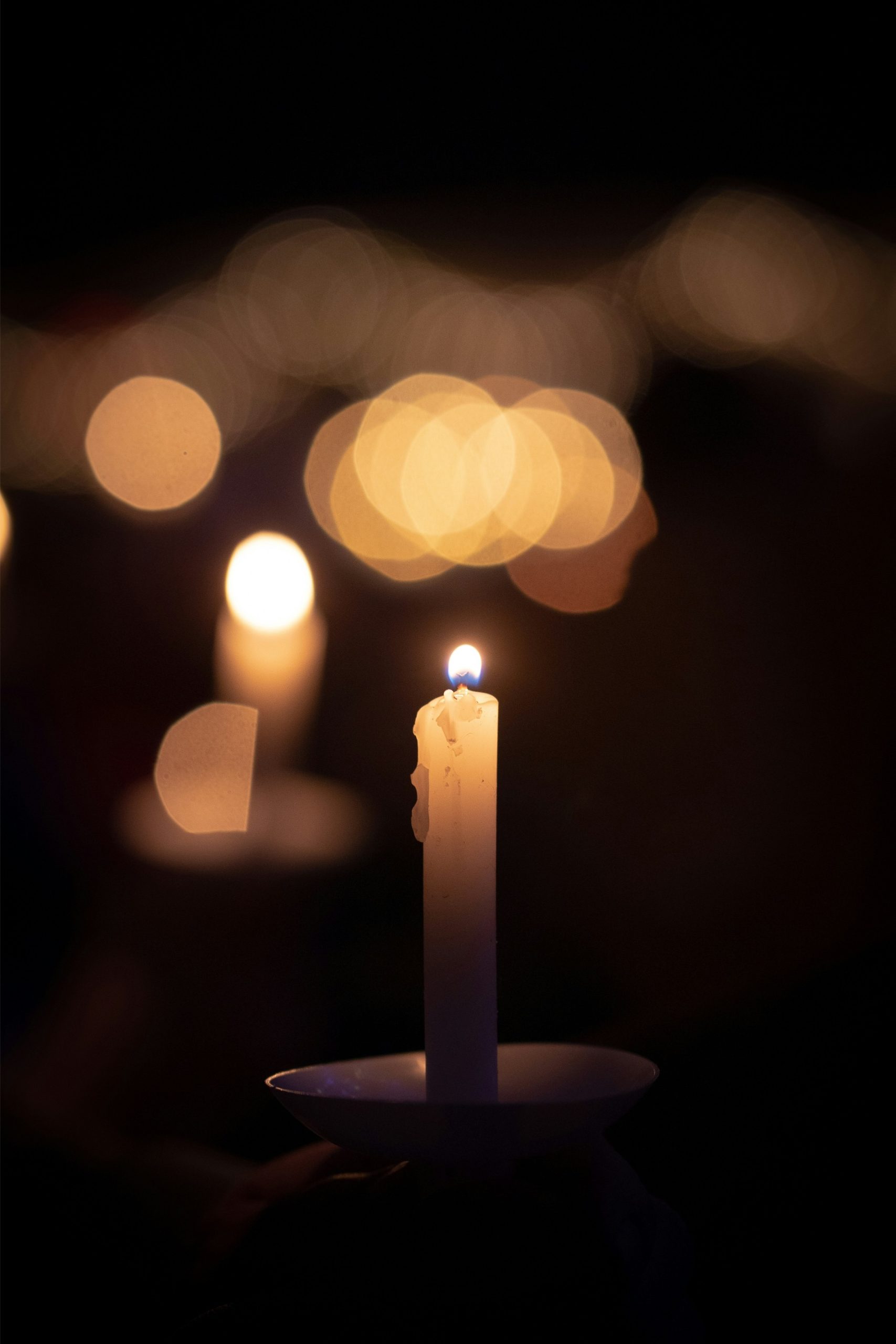
There is a kind of vigil that begins before someone passes over.
Not the sharp, sudden shock of unexpected loss — that is its own terrain, its own recalibration. I am thinking of something different. The long watching. The slow witnessing of a life that is beginning to complete itself. The sitting with someone you love as the body grows quieter, as new symptoms arrive and old ones deepen, as the distance between this world and whatever comes next seems, imperceptibly, to narrow.
This is the space I am writing from.
From reflection. From a wondering about how we, as human beings, meet the dying — and how we might meet it more fully. About what has been lost when death became something to manage rather than something to accompany. About what homeopathy, alongside so many other practices and traditions, might offer in that reclaiming.
If I’m honest — this is also my own quiet preparation. Writing this is part of that.
Grief is in the room before death even arrives and we, as family members, are part of that field — woven into the patterns and ancestry and intensity of a life that is completing itself. We are not neutral observers. We are inside the story.
Across cultures and time, human beings have gathered around the dying — staying close, marking the moment through presence, ritual, and care. As if something in us recognises that this threshold carries a depth we do not fully understand.
In the Tibetan Buddhist tradition, the Bardo Thodol — often called the Tibetan Book of the Dead — is read softly to the dying and recently deceased, guiding the consciousness through the luminous passages of transition. The environment is kept peaceful, the mind of the dying person gently oriented toward the light. Death is not feared; it is navigated, with wisdom as the guide.
In many African traditions, death is understood not as an ending but as a transition into the realm of the ancestors — those living presences who continue to guide and protect the family from the other side. Community gathers as drumming, singing, and dancing are woven into mourning — not to suppress grief, but to honour the life being released and to escort the soul safely home.
In Native American traditions, each nation holds its own ceremonies, yet a common thread runs through them all. Death is considered a natural part of life, and customs prepare the spirit to “walk on” — a continuation of a journey, not an end point. Vigil, song, and prayer hold the person through the transition.
In Mexico, Día de los Muertos turns the grief of separation into a celebration of continuity — the beloved dead invited back to the table, their memory woven into the living fabric of family and community.
In the Catholic tradition, the presence of the priest at the deathbed — the anointing, the prayers, the Last Rites — offers both sacred ceremony and a quiet reassurance: you are held, you are seen, you are received.
In the Sikh tradition, the recitation of Gurbani steadies the soul with the sound of sacred words, affirming the presence of the divine even at the very edge of life.
In our own time, the role of hospice care and more recently the death doula that is beginning to re-emerge — someone whose work is a kind of midwifery, accompanying the person who is dying with steadiness and care.
What we have forgotten — and what we are reclaiming
Stephen Jenkinson, who spent many years working in palliative care, writes in his book, Die Wise, about how modern Western culture has become profoundly death-phobic. We manage death. We medicate it, sedate it, schedule it, isolate it.
I see this in practice, and now in my own life — how quickly the room can fill with fear when death is treated as something to control, rather than something to accompany.
What most people mean when they say “end of life” is often, as Jenkinson suggests, the end of meaning in life — because in our culture, dying has been stripped of its place, its purpose, its belonging.
However, across centuries and cultures, human beings have known another way: to remain with the dying, to accompany them — through presence, ritual, prayer, and song — held by those who love them and are willing to remain.
Sometimes, within that space, the gentle intelligence of a well-chosen remedy can also offer support.
At the threshold
Sometimes, when we are close to someone who is dying — or when we hear of a death that touches the wider world — something inexplicable stirs in us – a sense that the fabric of things has been touched. I remember feeling that when Thich Nhat Hanh died, a man I had only met once but whose life had touched so many.
And yet, in families, every death carries its own gravity. Each life with its own story, its own relationships, its own history.
We find ourselves speaking in different ways — of the soul returning to source, of consciousness moving beyond the body, of something that continues beyond what we can see. These ideas live across many traditions, and have been explored by those who have spent a lifetime in deep contemplation and inner work.
If we are honest, there is something here that remains beyond our knowing and may always remain that way.
Perhaps what matters is not understanding what happens next. What matters is a willingness to remain present at the threshold, where mystery is not something to solve, but something to meet with a sense of wonder even as our hearts are breaking.
What homeopathy can offer at the threshold
At this stage of life, the remedy is no longer a tool for cure in the conventional sense.
It becomes something closer to a form of listening.
A way of meeting the person exactly where they are — physically, emotionally, and at the level of their deeper being.
There are moments when the body seems to be running out of breath, as if the vital force itself is flickering. The person may ask for air, for windows to be opened, for a little more space.
In these moments, remedies such as Carbo vegetabilis may sometimes gently support the organism — not to reverse what is happening, but to ease the effort of breathing, to soften the struggle, to bring a little more comfort into the body.
At other times, there is restlessness. Anxiety. A fear of being left alone. A need for reassurance, for presence, for someone to stay nearby.
Here, remedies such as Arsenicum album may resonate — not as a cure, but as a quiet companion to that inner state.
And then there is grief — sometimes silent, sometimes caught in the throat, sometimes expressed in deep, involuntary sighs.
In these moments, Ignatia can sometimes meet what cannot be easily spoken — the paradox of love and loss existing together, the body holding what words cannot carry.
These remedies are not given to prolong life at all costs, nor to interfere with the natural process of dying.
They are offered gently, when they truly resonate with the person’s experience — always in service of comfort, dignity, and peace.
The remedy, at this stage, becomes something close to a prayer.
Not a tool to change the outcome, but a way of aligning ourselves with what is already unfolding.
By Arunjot Kaur Mushiana, RSHom


